



Who Buys Vintage Cameras?
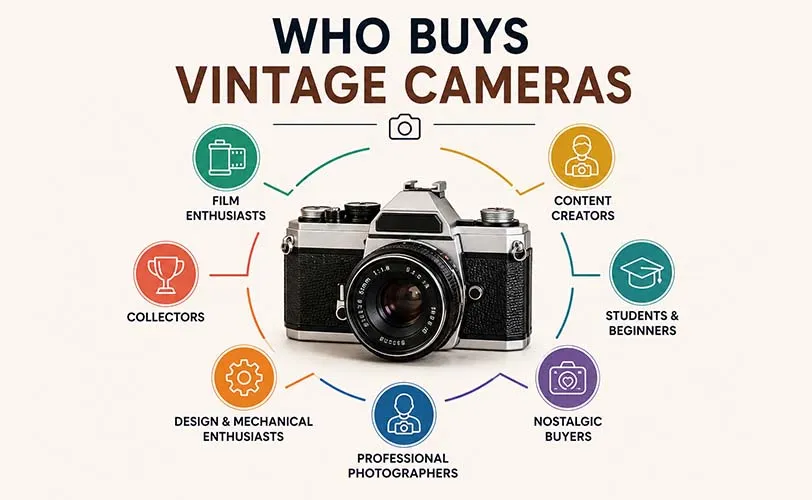
Vintage cameras are no longer bought only by serious collectors or older photographers. Today, the buyer base includes film enthusiasts, professional photographers, Gen Z creators, students, fashion creatives, camera collectors, and people looking for a distinctive photographic style.
So, who buys vintage cameras? The short answer is: people who value the experience, character, history, or visual style that older cameras can provide.
The renewed interest in film and older digital cameras has broadened the market considerably. Recent reporting shows strong interest from younger photographers and international buyers, particularly in compact cameras and film equipment. Go shopping.
8 Types of People Who Buy Vintage Cameras
The vintage camera market is surprisingly diverse. Some buyers want to use their cameras every week, while others are interested in collecting rare models or recreating a particular visual aesthetic.
Here are the main groups driving demand.
1. Film Photography Enthusiasts
Film photographers are one of the most obvious groups buying vintage cameras. They enjoy the slower, more deliberate process of loading film, composing a shot, manually controlling exposure, and waiting for development. A vintage camera can make photography feel more intentional compared with taking dozens of digital images and immediately reviewing them.
Film users also have plenty of options, from 35mm SLRs and rangefinders to medium-format systems and compact point-and-shoot cameras. The choice often depends on shooting style, budget, and desired image characteristics.
The continued interest is not simply nostalgia. Recent survey reporting indicates that film photography remains active, with newcomers contributing significantly to increased usage.
2. Vintage Camera Collectors
Collectors purchase cameras because the equipment itself has historical, mechanical, or cultural value.
For these buyers, a camera does not necessarily need to be used every day. A rare Leica, an early SLR, a classic Rolleiflex, or an unusual limited-production model can become part of a carefully curated collection.
Collectors often pay close attention to originality, condition, rarity, accessories, documentation, and provenance.
A complete camera with its original case, manual, lens, and accessories can be considerably more appealing than an incomplete example.
However, old does not automatically mean valuable. Demand, condition, rarity, brand, and usability generally matter more than age alone.
See more products on cameras.
3. Professional Photographers
Professional photographers also buy older cameras, particularly when they want a specific look or shooting experience.
A vintage camera may be used for editorial photography, portraits, weddings, fashion projects, personal projects, or commercial campaigns. Some professionals deliberately introduce film into otherwise digital workflows to create a different visual character.
For these buyers, reliability matters. They may be less interested in whether a camera is simply old and more interested in whether it produces the desired results and can be serviced when necessary.
Used equipment is increasingly being considered across different levels of photography rather than only by hobbyists. The U.S. second-hand camera market, for example, has attracted substantial buyer interest in recent years.
4. Gen Z and Younger Creators
One of the most interesting groups entering the vintage camera market is younger consumers who did not grow up shooting film.
For them, an old camera can feel new. Instead of seeing film as outdated technology, younger creators often see it as a way to produce photographs that look different from polished smartphone images. Grain, flash, muted colors, imperfect exposure, and unusual rendering can become part of the creative appeal.
The same behavior can be seen with early-2000s digital cameras. Recent reporting from Japan found that international buyers are actively seeking older compact cameras for their distinctive CCD rendering and retro aesthetic.
This makes the vintage camera market particularly interesting for buyers who care about visual identity as much as technical specifications.
5. Students and Beginner Photographers
Students often turn to older cameras because they can provide an affordable way to learn photography.
A basic vintage 35mm SLR can teach fundamentals such as shutter speed, aperture, focus, composition, and exposure without relying heavily on automated features.
There is also a psychological benefit. Film limits the number of photographs available on each roll, encouraging beginners to think before pressing the shutter.
Second-hand camera dealers have historically reported selling to students alongside enthusiasts, collectors, and professional photographers.
For someone learning the fundamentals, the best vintage camera is not necessarily the rarest one. A dependable, easy-to-understand model is usually more useful.
6. Fashion, Lifestyle, and Content Creators
Some buyers choose vintage cameras primarily because of the aesthetic they create.
A retro camera can become part of a broader visual style used for fashion shoots, travel content, social media photography, music projects, or lifestyle campaigns.
This is particularly relevant to compact cameras. Their small size makes them easy to carry, while their distinctive rendering can produce images that look noticeably different from smartphone photography.
The camera itself can also become part of the creator's identity. A recognizable vintage model can complement a retro, Y2K, streetwear, or analog-inspired visual theme.
7. Nostalgia Buyers
Not every vintage camera buyer is looking for technical performance. Some people purchase a camera because it reminds them of a particular period in their life.They may want the same model their parents used, a camera they owned during school, or a model they wanted but could not afford when they were younger.
This emotional connection can be powerful. A vintage camera can represent a memory rather than simply a piece of photographic equipment.
Second-hand camera dealers have reported buyers specifically seeking cameras they remember from their youth or models they could not afford when they were younger.
8. Design and Mechanical Engineering Enthusiasts
Some buyers are fascinated by how vintage cameras were constructed. Mechanical cameras can contain intricate shutter mechanisms, gears, dials, viewfinders, and precision components. For engineering enthusiasts, using or owning one can be as interesting as photographing with it.
This group may appreciate cameras for their build quality, industrial design, craftsmanship, and mechanical operation.
That is one reason well-built vintage cameras can remain desirable even decades after production ended.
Why Do People Buy Vintage Cameras Instead of Digital Cameras?
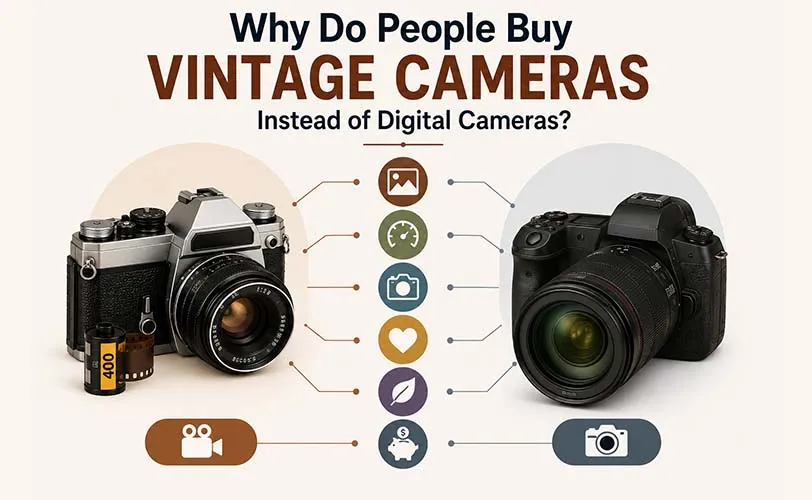
The answer depends on the buyer. A modern digital camera is generally more convenient, faster, and technically advanced. Yet convenience is not always the primary goal of photography.
Vintage cameras offer something different: a physical experience, a distinctive image style, limitations that encourage intentional shooting, and a connection to photographic history.
For film photographers, the process itself can be part of the attraction. For collectors, the camera may represent craftsmanship or history. For younger creators, it may provide an aesthetic that is difficult to reproduce convincingly with a smartphone.
That difference explains why vintage cameras continue to attract buyers despite the technical advantages of modern devices. Read more about vintage cameras.
What Are Vintage Camera Buyers Looking For?
Not every old camera attracts the same level of demand.
Buyers usually evaluate a combination of practical and emotional factors before making a purchase.
The important point is that different buyers value different features.
A collector may prioritize originality, while a beginner may care more about ease of use. A fashion creator may care primarily about appearance and image character.
Which Vintage Cameras Attract the Most Interest?
There is no single list of universally valuable vintage cameras. Demand changes according to the model, condition, market, and buyer type.
However, several categories consistently attract attention.
Classic 35mm SLRs
35mm SLRs remain popular because they combine interchangeable lenses, manual controls, and relatively straightforward operation.
Models from established manufacturers can appeal to both collectors and active photographers. That dual audience can support demand because the camera is useful as well as collectible.
Rangefinder Cameras
Rangefinders have a strong following among photographers who appreciate compact bodies, manual focusing, and distinctive handling.
Premium examples can also have significant collector appeal, particularly when the model has historical importance or a strong reputation.
Medium-Format Cameras
Medium-format cameras attract photographers who want larger negatives and a different approach to image-making.
They can be more expensive and less portable than standard 35mm systems, but their distinctive format keeps them relevant among serious film users and collectors.
Vintage Compact Cameras
Compact cameras have become particularly interesting because they sit at the intersection of convenience, nostalgia, and visual style.
Some older premium point-and-shoot models have developed cult followings, while early digital compacts are increasingly sought after for their characteristic rendering.
Are People Buying Vintage Cameras to Invest?
Some are, but investment should not be the only reason to purchase one. Certain cameras have increased substantially in value because demand has grown while the supply of good, original examples has remained limited. However, not every camera appreciates.
A camera's future value can depend on:
- Brand reputation
- Model popularity
- Rarity
- Condition
- Original components
- Historical significance
- Repairability
- Current photographer demand
- Collector interest
The market is therefore better understood as a combination of collecting and active use, rather than a guaranteed investment market.
A camera that becomes popular among photographers can benefit from a much larger buyer pool than an obscure model purchased solely because it is old.
Where Do Vintage Camera Buyers Shop?
Today's buyers use a mixture of online and offline channels. Specialist camera stores remain important because buyers can often inspect equipment, ask questions, and receive information about condition. Online marketplaces have also expanded access to vintage equipment, particularly for international buyers searching for specific models.
Auction platforms, camera fairs, antique stores, estate sales, thrift shops, and specialist online retailers can all be part of the buying journey.
For online shoppers, price comparison is particularly important. A desirable camera may appear at very different prices depending on condition, accessories, seller reputation, and whether it has been serviced.
That is where comparing offers and looking for camera deals and discounts can make a meaningful difference to the final purchase price.
What Should You Check Before Buying a Vintage Camera?
A low price does not necessarily make a vintage camera a good deal.
Before purchasing, buyers should consider whether the camera is actually functional and whether the asking price reflects its condition.
Check the Mechanical Condition
Look at the shutter, film advance, rewind mechanism, aperture controls, and other moving parts.
For film cameras, mechanical problems can be expensive or difficult to repair depending on the model.
Inspect the Lens
Check for haze, fungus, scratches, separation, and excessive dust.
A camera body may look excellent while its lens has serious problems, so both components should be evaluated separately.
Verify the Light Meter
Older cameras with built-in meters may have inaccurate or nonfunctional electronics.
This does not automatically make a camera unusable, but it can affect convenience and should be reflected in the price.
Consider Repair Availability
A rare camera with no accessible repair expertise can be less practical than a common model that can be serviced easily. This matters particularly for buyers who intend to use their camera rather than display it.
The Vintage Camera Market Is Bigger Than Collectors
The biggest misconception about vintage cameras is that collectors are the only serious buyers.
In reality, the market is made up of overlapping communities: photographers want to shoot film, creators want a distinctive aesthetic, students want to learn, collectors want historical objects, and nostalgic buyers want something connected to their past.
That diversity is one reason demand can remain resilient even when individual camera models rise or fall in popularity.
The renewed interest in analog photography also shows that vintage equipment can serve a purpose beyond nostalgia. Current photography coverage continues to highlight younger users and newcomers choosing film for creative and experiential reasons.
Who Should Buy a Vintage Camera?
A vintage camera may be worth considering if you:
- Want to learn film photography
- Prefer an analog shooting experience
- Want a distinctive retro aesthetic
- Enjoy collecting photographic equipment
- Need a camera for creative projects
- Appreciate mechanical craftsmanship
- Want to recreate a particular photographic style
- Enjoy experimenting with older technology
It may be less suitable if your priority is instant results, advanced autofocus, high-resolution video, extensive connectivity, or minimal maintenance.
Frequently Asked Questions
Who is the main buyer of vintage cameras?
The market includes film photographers, collectors, students, professional photographers, younger creators, nostalgic buyers, and people interested in vintage design. No single group dominates every camera category.
Why do people buy vintage cameras?
People buy them for several reasons, including film photography, unique image characteristics, nostalgia, collecting, craftsmanship, learning, and creative experimentation.
Are vintage cameras still popular?
Yes. Interest remains strong across both film and older digital cameras, with younger photographers and creators contributing to renewed demand. Recent market reporting has highlighted growing interest in older compact digital cameras as well as continued film use.
Do vintage cameras increase in value?
Some do, but not all. Brand, model, rarity, condition, originality, historical importance, and buyer demand have a greater influence on value than age alone.
Are vintage cameras good for beginners?
Some are excellent for beginners, especially straightforward 35mm SLRs with accessible controls and readily available lenses. The best choice depends on whether the beginner wants fully manual control or a simpler shooting experience.
What vintage cameras are worth buying?
The right choice depends on your purpose. A photographer may prioritize reliability and lens availability, while a collector may prioritize rarity and condition. There is no single vintage camera that is best for every buyer.
Is buying a vintage camera cheaper than buying a new camera?
It can be, but price varies dramatically. Some older cameras are inexpensive, while highly sought-after models can cost more than modern alternatives. Comparing condition, features, service history, and market prices is essential before buying.
Final Takeaway
So, who buys vintage cameras? Far more people than traditional camera collectors alone. Film photographers, professional creatives, students, Gen Z creators, nostalgic buyers, collectors, and design enthusiasts all contribute to today's market.
The best vintage camera is ultimately the one that matches the buyer's purpose. Whether that means shooting film, creating a retro aesthetic, learning photography, or owning a piece of photographic history, understanding the buyer behind the purchase makes it much easier to choose the right camera—and the right price.
 Share On Twitter