


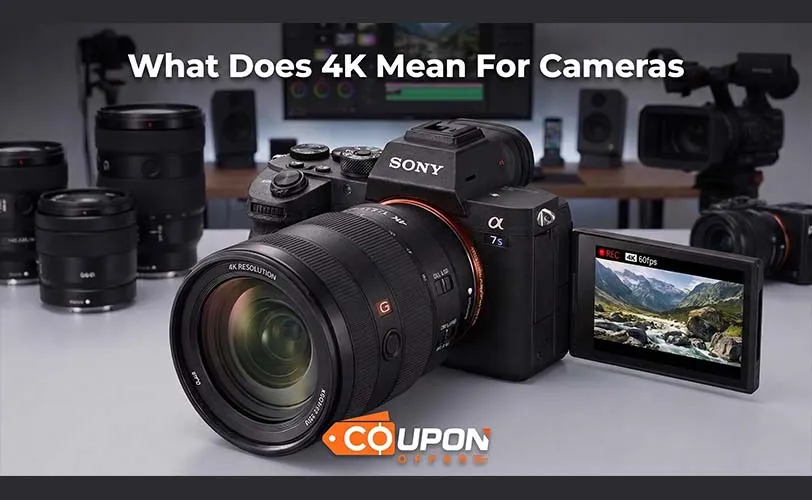

What Does 4K Mean for Cameras? Resolution Guide for Creators
As you start looking into current camera and videography equipment, it's likely you're going to come across the term 4K on the camera body and spec sheet, and on retail boxes. There is a lot to know when buying your vlogging or filmmaking equipment, or even just your family photos; if you're willing to upgrade, learn about vlogging camera resolution.
You may be wondering, “what is 4k resolution for camera?” 4k resolution is roughly 4,000 pixels in width for a video. To be honest, regular 4K Ultra HD (UHD) delivers a matrix of 3840 x 2160 pixels, or about 8.3 million pixels per frame. That’s an additional 1080p (Full HD) times four in terms of detail and clarity, and your footage will come with a level of realism and depth you'd never thought possible. If you are really excited to get a camera, then you can look our best Camera collection.
The Technical Specs Behind 4K Video Resolution
Let's break down the technical metrics that contribute to video clarity to understand how 4K enhances picture quality:
- The resolution of Standard Full HD (1080p) is 1920 x 1080 (approx. 2 million pixels). 4K UHD quadruples that to 3840 x 2160 pixels, on the other hand.
- Aspect Ratio: Most consumer 4K cameras capture in a 16:9 widescreen format that is integrated with modern TVs, computer monitors, and streaming services.
- Theatrical 4K (DCI 4K): DCI 4K (4096×2160) is a video resolution commonly used in professional video equipment and has a slightly wider aspect ratio, 1.9:1, that is intended for use in theaters.
Why Shooting in 4K Matters for Creators
With 4K footage, you can enjoy many benefits beyond viewing on a higher-resolution screen. An active-cooled cinema camera is ideal for creators who are solely concentrating on video, as it offers extended recording durations without overheating.
A higher level of flexibility in post production:
The additional density allows editors to have a large amount of creative freedom during post production. While producing a final 1080p video, you can crop into a shot, pan across a scene or digital zoom up to 200% without losing any sharpness.
Sharper Full HD Downsampling:
If you record in 4K and even if you upload/deliver in 1080p, you'll get cleaner results. Downscaled 4K video output enhances fine details, color transitions and reduces visual noise from video recorded at 1080p.
Future-Proofing Your Content:
Standards for display change quickly. Video footage captured in 4K guarantees that you have high-quality video for years to come. For those who wish to consider other possibilities for their setup, you can find an extensive selection of cameras from us online.
4K vs. 1080p vs. 8K: Resolution Comparison
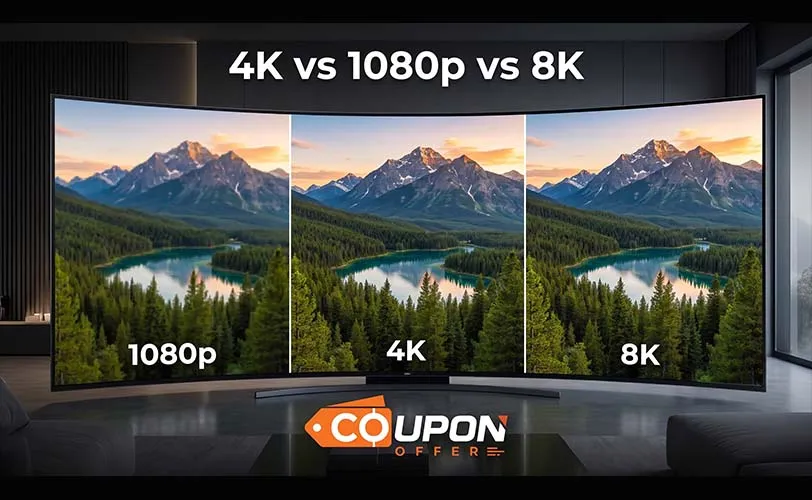
Resolution comes with a cost; you need to consider your storage requirements, your computer's processing capabilities, and what you're trying to accomplish:
In the Cinema production, you should use extreme post-cropping. In the Cinema production, extreme post-cropping is used.
If you're looking for a camera body that can capture both high-quality still photos and dynamic video clips, a best hybrid camera is the perfect fit for any creative endeavor.
When purchasing a 4K camera, there are a number of technical considerations to keep in mind.
Technical Factors to Consider When Buying a 4K Camera
Not every 4K video mode is the same. Here are some hardware factors to consider when comparing camera set-ups:
- The frame rate (FPS) is standard (24fps/30fps) for recording in 4K in natural movement. For smooth slow-motion footage, seek out models that have the ability to capture at 4K at 60fps or 120fps.
- Some cameras that are used for entry level purposes have a crop factor in 4k mode which constricts the field of view. Advanced systems scan a much larger sensor area for full wide shots.
- Storage & Bitrates: 4K is a large file size, and requires an SD card with a high speed (UHS-II or CFexpress) to avoid buffer lag when shooting continuously.
- Thermal Management: 8.3 million pixels per frame create heat. For high-end body designs, it features dedicated heat sinks or cooling vents to ensure no overheating during extended video shooting sessions.
For more lightweight and flexible options with excellent sensor capabilities, check out our full range of mirrorless cameras. It's important to remember that recording in 4K can be a nuanced process and requires the right equipment, especially when you're already an experienced videographer.
For those who are learning about the bodies and how they work, read our article on do mirrorless cameras have a shutter to know about the internal shutter.
Conclusion
Then, what is the significance of the term 4K with cameras? It's a drastic improvement from Full HD with four times the resolution. At 3840 x 2160 pixels per frame, 4K recording promises breathtaking clarity, depth and an incredible flexibility in editing. A robust 4K solution provides the versatility to easily produce pro-level video with confidence. You can check out our main store at Coupon Offer to find the best deals on modern digital gear.
Frequently Asked Questions
Does 4K video take up more memory card space?
Yes, 4K files are significantly larger than 1080p files, and have higher bitrates. High speed and storage SD cards (UHS-II or CFexpress) will be required to record without buffer stops.
Should a 4K camera be a starter's choice?
Indeed, 4K is the current trend for video creation. With 4K body you always shoot your content in a sharp, modern and relevant way on all modern screens and social platforms.
Is it possible to shoot high-resolution still photos with a 4K camera?
Yes, nearly all 4K video cameras have been great quality still photographers. The same sensor and image processor is used for video recording and taking photos.
What is the difference between 4K and UltraHD (UHD)?
For consumer electronics, 4K UHD is 3840 x 2160 pixels (16:9). Professional Cinema 4K (DCI 4K) is 4096 x 2160 pixels, and has a slightly wider 1.9:1 aspect ratio for film.
Do I need a 4K computer monitor to edit 4K videos?
No, 4K video can be edited on a standard 1080p monitor without any problem. But with the native 4K display you can enjoy colors, focus and fine details in total accuracy.
Why do some cameras overheat when taking 4K footage?
There is a considerable amount of heat generated as the camera has to process 8.3 million frames per second. This is handled by the camera body by various means: internal heatsinks, thermal design, or cooling fans.
Is it really better to post 4K video to social media?
Yes. Uploaded videos are compressed on platforms, and 4K uploads cause YouTube and other platforms to use more advanced codecs (VP09/AV1), which means that the lower resolution versions play better.
 Share On Twitter