


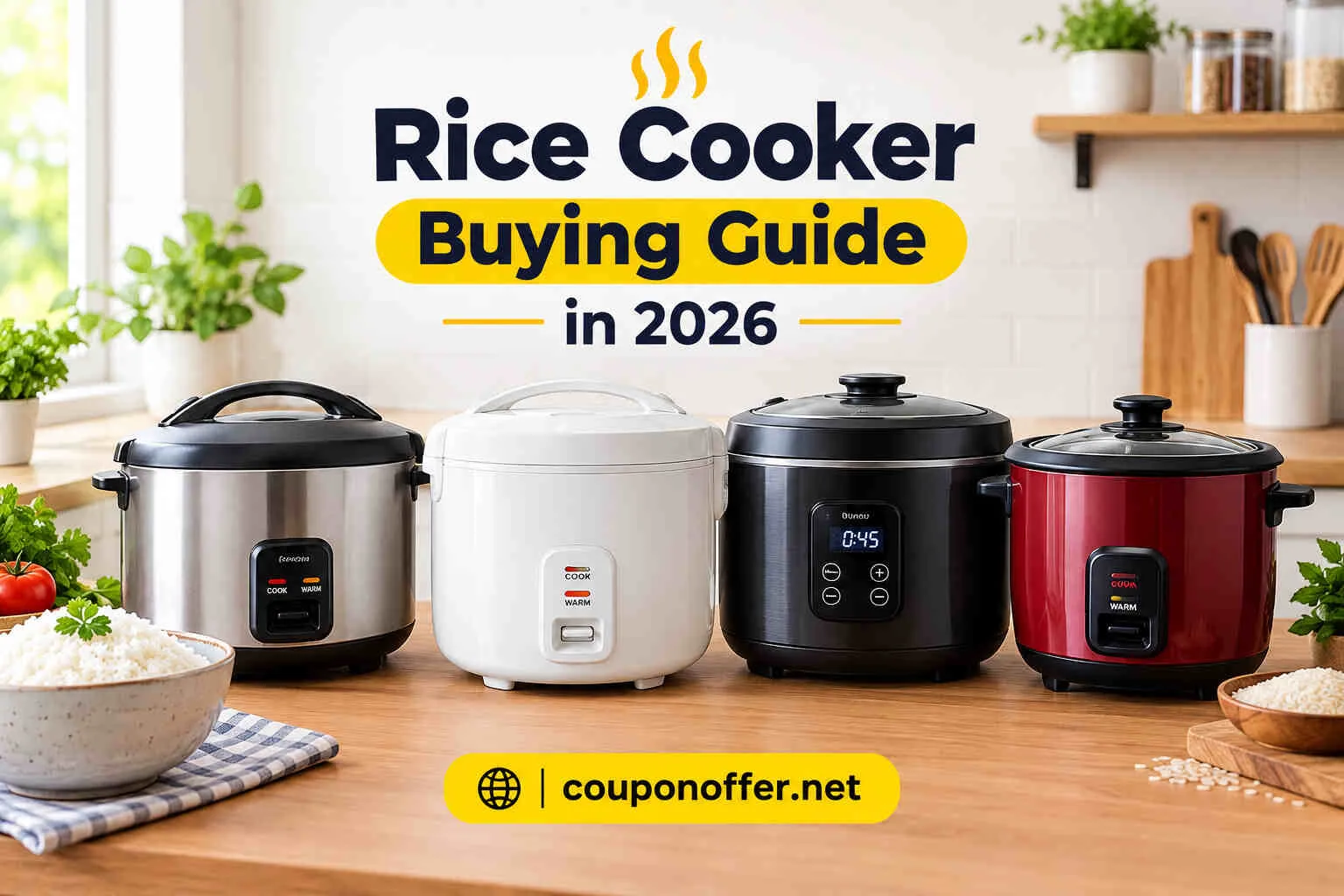

Rice Cooker Buying Guide in 2026: How to Choose the Best
Choosing a rice cooker may seem simple, but the right model depends on more than price or brand. Capacity, cooking performance, inner pot quality, useful features, energy consumption, cleaning, safety, and your household size can all affect whether a cooker is genuinely convenient for you.
A good rice cooker should match the way you actually cook. A single person may need a compact model, while a family may benefit from a larger capacity and more flexible cooking programs. This Rice Cooker Buying Guide in 2026 explains the key factors to consider before spending your money, so you can choose a model that fits your kitchen and daily routine.
Why Do You Need a Rice Cooker?
Before you look at models, think about why you need one. A rice cooker makes cooking rice easy. You measure the rice and water, pick a setting, and the machine does the rest.
If you eat rice a lot, this really helps. Most cookers switch to "keep warm" after cooking. So your rice stays warm until you're ready to eat.
It's not just for big families. Students, couples, and small households find it useful too. Some models can also steam food, make porridge, or heat up leftovers, not just cook rice.
Don't pay more just because a cooker has more features. If you only need to cook plain white rice, a simple model will work fine. You don't need extra settings you'll never use.
Want to compare rice cookers with other kitchen tools? Check out the kitchen appliances collection to see what fits your needs best.
What Rice Cooker Capacity Do You Need?
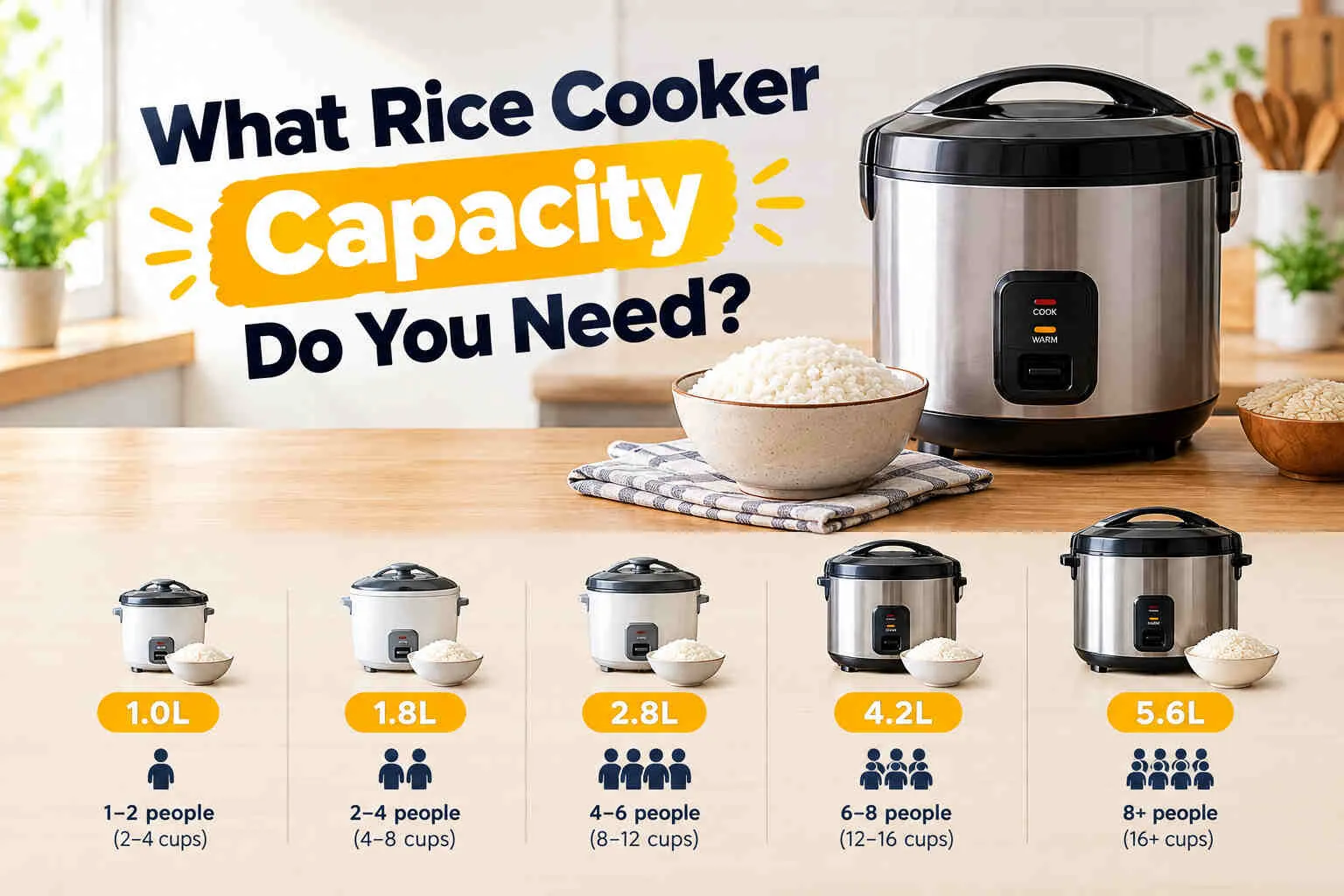
Capacity matters a lot. Buy the wrong size, and the cooker becomes a hassle to use. A small cooker works fine for one or two people. A bigger household needs more capacity. Think about how many people eat together, and how much rice you cook most days.
Rice Cooker Size for 1–2 People
A small rice cooker is great for one person, a student, or a couple. It takes up less counter space and is easier to store. If you only cook small portions, a big cooker won't really help you. A compact one covers your daily meals without wasting kitchen space.
Rice Cooker Size for 3–5 People
A medium-size cooker usually works best for families or homes where several people eat rice regularly. It cooks enough food for a few people, but still fits well in a normal kitchen.
Large Rice Cooker for Families
Bigger families may need a larger cooker, especially if you cook rice often or in big batches. But size isn't everything a large cooker also needs more storage space. Check the dimensions before you buy.
What Features Matter When Buying a Rice Cooker?
Once you know the size you need, check the features. The best rice cooker isn't the one with the most settings. It's the one with features you'll actually use.
Keep Warm Function
This is one of the most useful features. Once the rice is done, the cooker switches to warm mode automatically. Handy when not everyone in the house eats at the same time.
Automatic Cooking and Shut-Off
With automatic cooking, you don't need to watch the pot. The cooker also shuts off or switches modes on its own when done. Check the manual to see exactly how your model handles this..
Timer and Delay Start
Some cookers let you set a timer or delay the start time. Useful if you want rice ready by a certain time. If your schedule is busy, this feature can save you time.
Multiple Cooking Modes
Some rice cookers do more than just cook rice. Depending on the model, you might get options like:
- White rice
- Brown rice
- Porridge
- Steaming
- Reheating
- Slow cooking
Before you pay extra for these, think about whether you'll actually use them.
Which Rice Cooker Inner Pot Is Better?
The inner pot touches your food directly, so it's worth checking closely before you buy.
Nonstick Inner Pot
Nonstick pots are popular for a reason rice comes out easily, and cleaning is simple. Just be careful with it. Don't use metal spoons or harsh scrubbers, or the coating can wear out fast.
Stainless Steel Inner Pot
Stainless steel lasts long and doesn't scratch easily. Good if you care more about durability than anything else. But rice can stick more compared to a good nonstick pot.
Ceramic Inner Pot
Some higher-end cookers use ceramic-coated pots. These are a good option if you want to avoid regular nonstick coatings. But don't assume one material is best for everyone check what the brand actually says about it.
What Makes a Good Inner Pot?
Check the thickness, build quality, coating, how easy it is to clean, and whether you can buy a replacement pot later. A cooker can have great buttons and settings, but if the inner pot is cheap, using it every day gets annoying fast.
How Much Power Does a Rice Cooker Use?
If you use your rice cooker a lot, power usage matters too. Check the wattage, but don't judge it by that number alone. A higher-wattage cooker may cook faster. A lower-wattage one may take more time.
Your actual electricity bill depends on a few things:
- Wattage
- How long it cooks
- How often you use it
- How long you keep it on "warm" mode
- Which setting you use
Leaving a cooker in keep-warm mode for long periods can add to its total electricity usage. If energy costs matter to you, consider how you will use the cooker rather than focusing only on the number printed on the specification sheet.
The same principle applies when comparing kitchen appliances generally. For example, a product such as the GE 24-inch Over-the-Range Microwave lists its cooking power and other specifications separately, showing why appliance specifications need to be considered in the context of actual use.
Is the Rice Cooker Easy to Clean?
Cleaning is easy to overlook when buying a kitchen appliance, but it becomes important after daily use. Look for a removable inner pot and components that can be cleaned without excessive effort.
Removable vs. Non-Removable Inner Pot
A removable pot is generally more convenient because you can take it out and wash it separately from the main electrical unit. Never immerse the electrical body of a rice cooker in water unless the manufacturer specifically states that it is designed for that type of cleaning.
What Parts Need Regular Cleaning?
Depending on the model, pay attention to:
- Inner pot
- Lid
- Steam vent
- Condensation collector
- Rice paddle
- Exterior surface
Cleaning these areas regularly can help prevent food residue and buildup. If you are comparing several kitchen appliances at once, it is useful to consider maintenance alongside cooking performance. The Panasonic Stainless Steel Microwave Oven demonstrates how features such as construction and appliance design can matter alongside basic cooking functionality.
What Safety Features Should You Check?
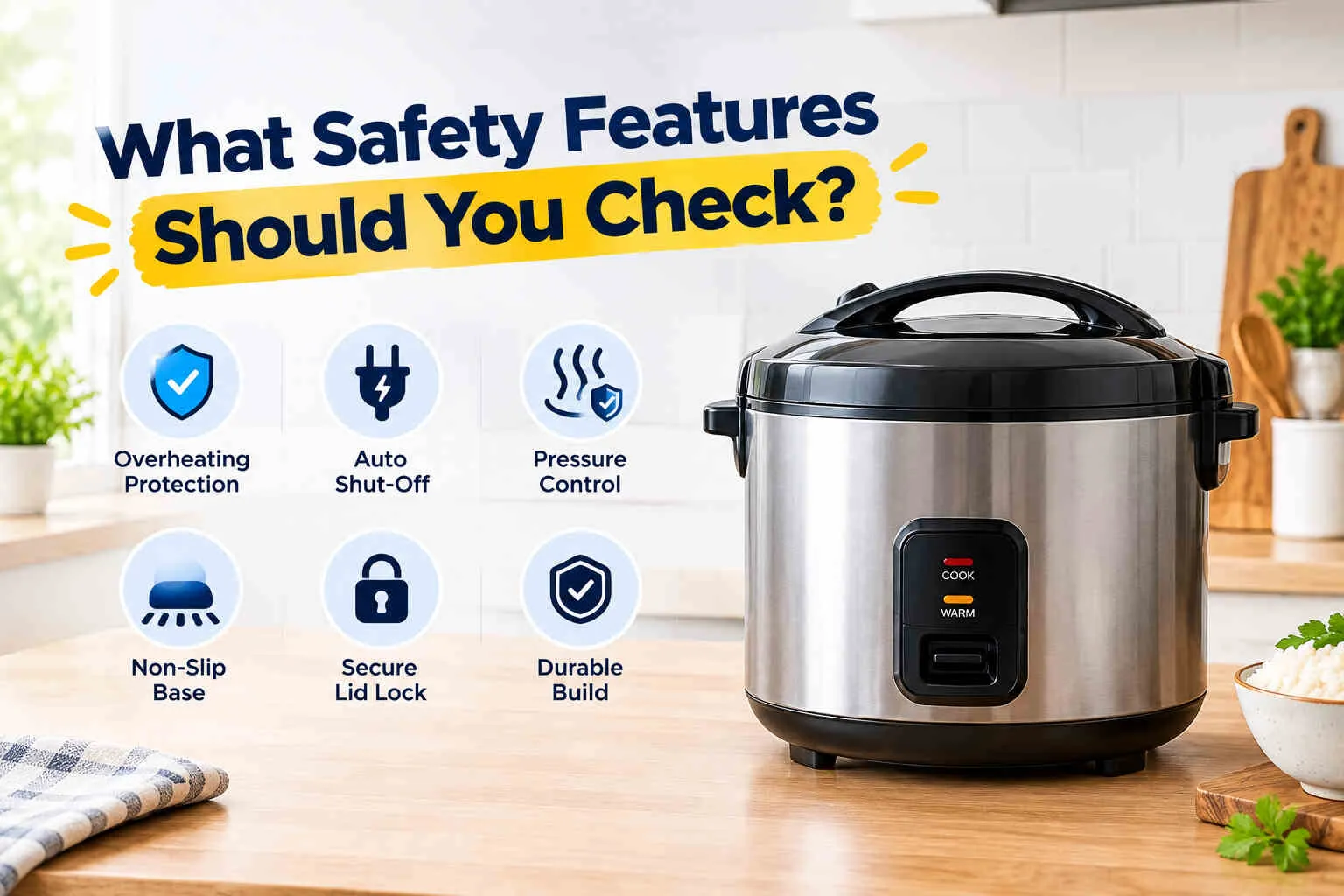
Safety should be part of your buying decision because a rice cooker is an electrical appliance that produces heat. Look for features such as automatic shut-off, overheating protection, heat-resistant handles, and a stable base.
Automatic Shut-Off
An automatic shut-off system can reduce the need to manually switch the cooker off after a cooking cycle.
Overheating Protection
Overheating protection is another useful feature to look for, particularly if the cooker will be used frequently.
Heat-Resistant Exterior and Handles
Handles and exterior surfaces should be designed to make normal handling safer. Always follow the manufacturer's instructions regarding hot surfaces and steam.
Stable Base and Quality Power Cord
The cooker should sit securely on a stable surface. Check the power cord and plug quality as well, and use the appliance according to the electrical requirements specified by the manufacturer.
How Much Should You Spend on a Rice Cooker?
Your budget should depend on what you actually need.
Budget Rice Cookers
Basic models can be suitable if your main requirement is straightforward rice cooking. You may get fewer cooking programs, simpler controls, and fewer advanced features.
Mid-Range Rice Cookers
A mid-range cooker may offer a better balance between convenience and functionality. Features such as improved controls, keep-warm functions, multiple cooking programs, and better inner-pot construction may become available.
Premium Rice Cookers
Premium models can include advanced cooking technology, programmable settings, specialized cooking modes, and more sophisticated controls. A higher price does not automatically mean the product is the right choice for you. Pay for features that solve a real problem in your cooking routine.
How to Match a Rice Cooker to Your Needs?
Don't ask which rice cooker is the "best" overall. Ask which one fits your situation.
Rice Cooker for Small Households
If you live alone or with one other person, go for something small, simple to use, easy to clean, and low on power use.
Rice Cooker for Families
Families should look for enough capacity, reliable cooking, a good keep-warm function, and a sturdy build.
Rice Cooker for Multifunction Cooking
Want one appliance that does more than rice? Look for programmable modes and steaming or other extra functions.
Rice Cooker for Budget Buyers
On a tight budget? Stick to the basics: right capacity, reliable cooking, a decent inner pot, basic safety features, and easy cleaning. You don't need an expensive smart cooker to make good rice every day.
Common Rice Cooker Buying Mistakes to Avoid
Avoiding these mistakes matters just as much as picking the right features.
Buying the Wrong Capacity
Don't buy a cooker just because it's cheap or looks nice. Make sure the size actually fits your household.
Choosing Features You Will Never Use
A long list of cooking programs may look impressive on paper. But features you never touch just add to the price and make the cooker more complicated to use.
Ignoring Inner Pot Quality
You use the inner pot every single day. If it's poor quality, it'll affect your whole cooking experience.
Looking Only at Price
The cheapest option isn't always the best value. Compare build quality, features, warranty, and ease of use before deciding.
Ignoring Warranty and Replacement Parts
Check if you can buy a replacement inner pot or other parts later. A good warranty also gives you extra peace of mind if something breaks.
What Should You Check Before Buying a Rice Cooker?
Use this quick checklist before making your final purchase:
- Capacity suitable for your household
- Reliable cooking performance
- Useful cooking modes
- Keep-warm function
- Good-quality inner pot
- Reasonable power consumption
- Easy cleaning
- Appropriate safety features
- Suitable price
- Warranty coverage
- Replacement parts availability
- Customer reviews
You can also use CouponOffer to explore broader product deals and compare kitchen-related products while researching your purchase.
Final Thoughts on Choosing a Rice Cooker in 2026
The right rice cooker should make your everyday cooking easier rather than adding unnecessary complexity. Start by deciding how much rice you normally cook and how many people you need to serve. Then consider useful features, inner pot quality, electricity consumption, cleaning, safety, budget, and warranty.
A compact cooker can be perfectly practical for a small household, while a larger family may benefit from greater capacity and stronger functionality. Likewise, someone who only cooks rice may prefer a simple model, while a frequent home cook may appreciate multifunction settings.
The most important lesson from this Rice Cooker Buying Guide in 2026 is to buy according to your actual needs. Compare the specifications that matter to you, consider long-term usability, and avoid paying extra for features you are unlikely to use. That approach makes it easier to find a rice cooker that offers the right balance of convenience, performance, durability, and value.
Frequently Asked Questions About Rice Cookers
What is the most important thing to consider when buying a rice cooker?
Capacity is one of the most important factors because the cooker should match the amount of rice you normally prepare. After capacity, consider cooking performance, inner pot quality, features, cleaning, safety, and price.
What size rice cooker do I need for a family?
The appropriate size depends on the number of people eating rice and your typical serving quantities. A small household generally needs less capacity than a larger family.
Is a more expensive rice cooker worth it?
It can be worth paying more when the additional features, cooking performance, durability, or convenience match your needs. Higher price alone does not guarantee better value.
Can you cook things other than rice in a rice cooker?
Some multifunction rice cookers support foods such as porridge, steamed dishes, or other recipes. Always check the manufacturer's supported cooking modes before using a specific function.
How much water should you put in a rice cooker?
The amount depends on the type of rice, quantity, and manufacturer's instructions. Use the measurement markings or instructions supplied with your specific cooker rather than relying on one universal ratio.
Which inner pot material is best for a rice cooker?
There is no single material that is best for everyone. Nonstick can offer convenient cleanup, stainless steel can provide durability, and ceramic options may appeal to people looking for a different cooking surface.
How much electricity does a rice cooker use?
Electricity consumption depends on wattage, cooking time, frequency of use, and how long the keep-warm function remains active. Check the appliance's wattage and consider your actual usage pattern.
How do you clean a rice cooker?
Remove and clean the inner pot according to the manufacturer's instructions. Clean the lid, steam vent, and condensation components when applicable, and wipe the electrical body with an appropriate damp cloth rather than immersing it in water.
 Share On Twitter