



Can We Use Lizol in Robot Vacuum?
“Good Housekeeping cleaning experts noted that modern robot mops perform best when users follow manufacturer-approved cleaning solution guidelines instead of using harsh chemical disinfectants.” Source: Good Housekeeping Robot Mop Testing
-----------------------------------------------------------------------------------------------------
Cleaning was easier than ever with the robot vacuum mops! Many people now require a deeper clean and a better freshness of the floors, so one common question is: Is it safe to use lizol in a robot vacuum cleaner system?
The answer is No, Not inside the water tank itself unless the manufacturer clearly states it is okay. Certain brands of robot vacuum makers do not like strong disinfectants, heavy duty cleaners or chemical liquids for the floor since they may harm the mop system, clog the inside pipes and can have an impact on the performance of the sensors over time. Nevertheless, the complete solution is related to the robot model, the type of floor cleaner, and the dilutions of the liquid.
In this guide, you will learn the truth about people putting Lizol in their robot mops, what the risks are, and what are the better cleaning alternatives without using Lizol?
Why People Want to Use Lizol in Robot Vacuum Mops
Most users are attempting to accomplish a simple problem. When it comes to the home, where floors may be covered in grease, bacteria or with pets and children, using water is not enough sometimes.
That is why many property owners resort to looking for key phrases like:
May I use disinfectant in a robot vacuum cleaner? is Lizol safe for use in a robot vacuum mop?
Typically people are looking for three things:
- The smell is improved following mopping.
- Germ protection
- Stronger stain removal
The issue is, the robot vacuum mop systems aren't constructed like conventional bucket mops. They have smaller and more sensitive water channels, pumps, filters and spray systems within their bodies. Products that work well on your floor might not work in an automated cleaning machine. It is useful to understand how these systems work before making a choice of liquid to use.
How Robot Vacuum Mop Water Systems Actually Work
Today's robot vacuum mops have very controlled water flow systems. Some provide gravity-fed dripping, and high-tech systems provide electronic pumping and pressure-controlled water output. Popular devices like the Eufy Robot Vacuum Omni C20 and Dreame X40 Ultra include smart water distribution systems designed specifically for clean water or approved cleaning solutions.
Inside most robot vacuum mops, you will usually find:
These components are sensitive to chemicals, oily residue, foam, or harsh disinfectants. That is why manufacturers often refer using only water or officially approved liquids. Now the important question becomes: what exactly happens when people use Lizol?
What Happens if We Use Lizol in Robot Vacuum Cleaner Systems?
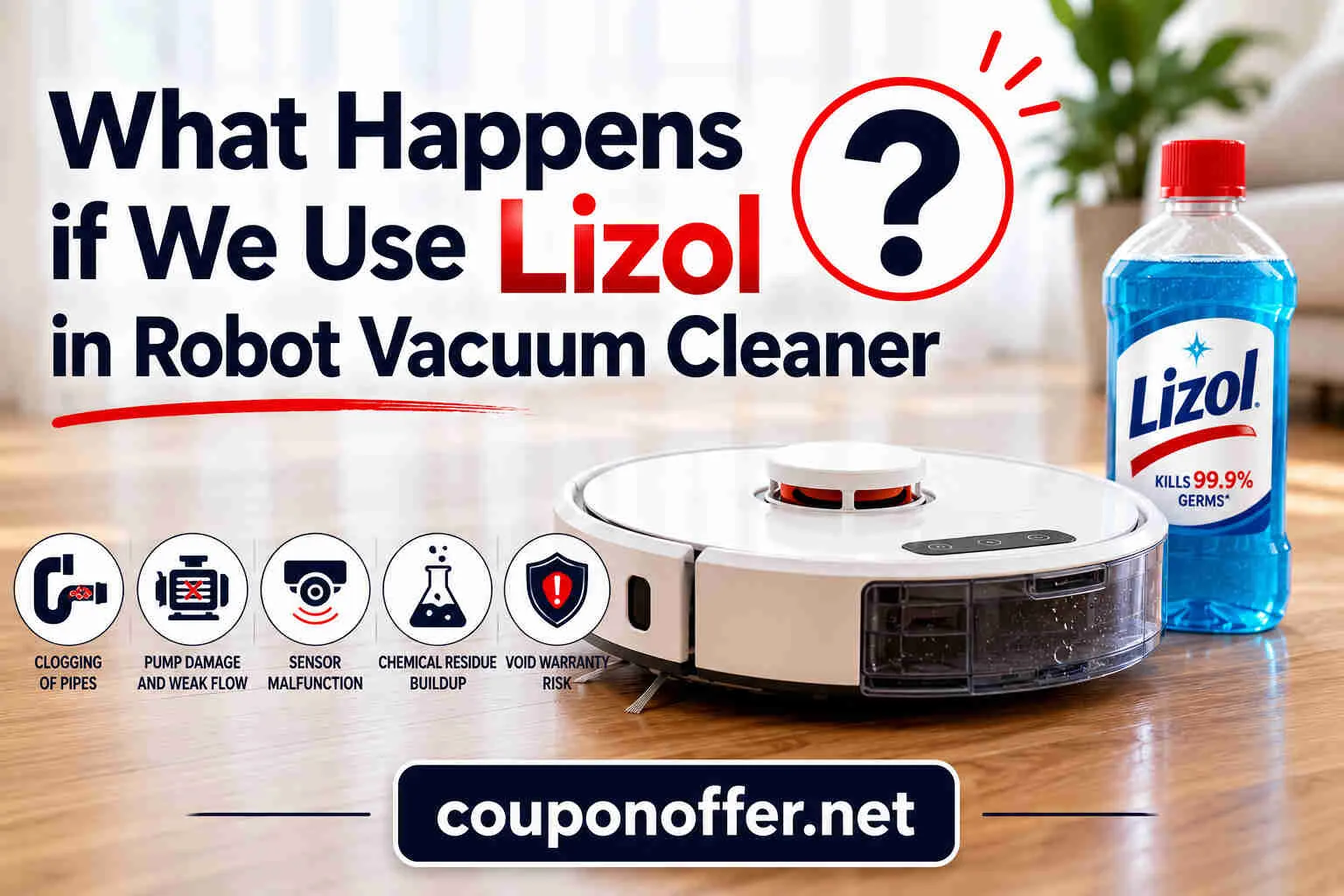
This is where many users unknowingly create long-term issues. If you directly pour concentrated Lizol into the water tank, several things can happen depending on the robot model and the amount used.
Possible Short-Term Effects
Initially, the floor may smell cleaner and appear shinier. Some users feel satisfied after the first few cleaning cycles because the fragrance spreads across the room. However, problems often begin gradually.
Possible Long-Term Problems
Many users asking what happens if we use lizol in robot vacuum cleaner are usually worried after noticing issues like:
- Reduced water flow
- Uneven mopping
- Strange odor from tank
- Pump noise
- White chemical residue
- Sensor errors
Strong cleaning liquids sometimes leave deposits inside the narrow tubes. Over time, this can affect water circulation and internal pressure. This also leads to another major concern: does lizol clog robot vacuum water tank systems?The answer is yes, it potentially can.
Does Lizol Clog Robot Vacuum Water Tank Systems?
Robot vacuum mop tanks are much smaller than traditional cleaning equipment. Even slightly thick cleaning agents can leave residue buildup inside the pipes. This becomes more risky in humid environments where leftover liquid stays inside the tank for long periods.
Common Signs of Tank Clogging
This is why many manufacturers avoid recommending strong disinfectants. Users often search can lizol damage robot vacuum mop system because these repairs can become expensive after repeated chemical exposure. The risk becomes even higher in premium robots with advanced automatic mop-washing stations.
Can Lizol Damage Robot Vacuum Mop System Components?
The biggest concern is not usually the floor. It is the internal hardware. Many disinfectants contain chemicals that were never intended for miniature robotic pumps or rubber seals. Over time, they may weaken internal materials.
Advanced devices like the iRobot Roomba 105X Combo contain multiple moisture-sensitive components working together during automatic cleaning cycles. Here are some common parts that may get affected:
Rubber Seals
Some chemicals slowly dry or weaken rubber materials. This can eventually create leakage problems.
Internal Pumps
Foamy or thick liquids may create pump stress and inconsistent water pressure.
Water Sensors
Chemical residue can interfere with moisture detection systems.
Mop Washing Stations
Premium self-cleaning docks often reuse and circulate water internally. Chemical buildup inside these systems becomes harder to clean. Because of these risks, users should focus more on robot vacuum mop safe cleaning liquids instead of strong household disinfectants.
Best Floor Cleaner for Robot Vacuum Mop Systems
The safest option is always manufacturer-approved cleaning liquid. These are usually low-foam, low-residue, and optimized for robotic systems. If you are searching for the best floor cleaner for robot vacuum mop, look for these features:
Some brands also sell dedicated robot cleaning liquids through official accessory stores. If you are comparing robot cleaning systems or accessories, many users also explore robot-compatible cleaning tools through cleaning tools and robot vacuum accessories before choosing a safer maintenance routine. Still, many users continue asking whether diluted Lizol is acceptable. So let us discuss the safer middle ground.
Can I Put Lizol in Robot Vacuum Water Tank if It Is Diluted?
This is probably the most common question online. Technically, some users do add very small amounts of diluted Lizol without immediate damage. But that does not automatically make it safe. The risk depends on:
- Robot brand
- Tank design
- Pump system
- Chemical concentration
- Frequency of use
If Someone Still Wants to Use It
Some experienced users follow precautions like:
- Using only a few drops
- Diluting heavily with water
- Cleaning the tank afterward
- Avoiding daily use
- Never mixing multiple chemicals
However, even diluted disinfectant may still void warranty coverage in some brands. That is why many experts recommend choosing a dedicated safe cleaning solution for robot vacuum cleaner systems instead. The goal should be maintaining both hygiene and hardware lifespan together.
Robot Vacuum Mop Safe Cleaning Liquids That Work Better
A safer approach is using liquids specifically made for automated mop systems.
These are designed to avoid:
- Excess foam
- Thick residue
- Corrosion
- Sensor interference
Recommended Safer Alternatives
Many newer robots already optimize cleaning efficiency using advanced mop pressure and hot-water systems. High-end devices like the Dreame X40 Ultra already deliver strong cleaning performance without requiring aggressive disinfectants. For most homes, proper maintenance matters more than adding strong chemicals.
Smart Ways to Keep Your Robot Vacuum Hygienic Without Lizol
People often focus only on floor disinfecting while ignoring robot hygiene itself. In reality, dirty mop pads and tanks create more odor problems than water alone. Here are better long-term cleaning habits:
- Wash Mop Pads Frequently
- Empty Water Tanks Regularly
- Clean Internal Filters
- Use Distilled or Filtered Water
- Run Maintenance Cleaning
Many robot models support self-cleaning cycles that improve hygiene naturally. These simple habits usually solve the freshness problem without risking hardware damage.
Should You Use Disinfectant in Robot Vacuum Cleaner Systems?
For most users, the safest answer is moderation.
Using strong disinfectants daily inside robotic mop systems is generally not recommended unless the manufacturer specifically approves it. The safer approach is:
- Water for daily cleaning
- Robot-safe liquids occasionally
- Manual disinfecting when needed
This protects both the robot and the flooring. People often underestimate how expensive repairs become after liquid-related internal damage. Pumps, docks, and sensors are delicate components. That is why professional cleaning recommendations usually prioritize safe maintenance over aggressive chemicals.
Final Thoughts on Can We Use Lizol in Robot Vacuum Cleaner
it's not a good idea to add the normal Lizol directly to the water tank. Some users might not notice any problems upon short-term use but, over time, it can clog the system, cause damage to internal parts, lead to lower water flow, or cause the robot to last only a short while. If you want safer and more reliable cleaning, focus on:
- Robot-approved cleaning liquids
- Proper tank maintenance
- Regular mop cleaning
- Mild low-residue solutions
Modern robot vacuum mops already clean efficiently when maintained correctly. Using harsh disinfectants usually creates more risk than benefit. If hygiene is your top priority, occasional manual disinfecting combined with robot-safe cleaning practices is usually the smartest balance.
 Share On Twitter