


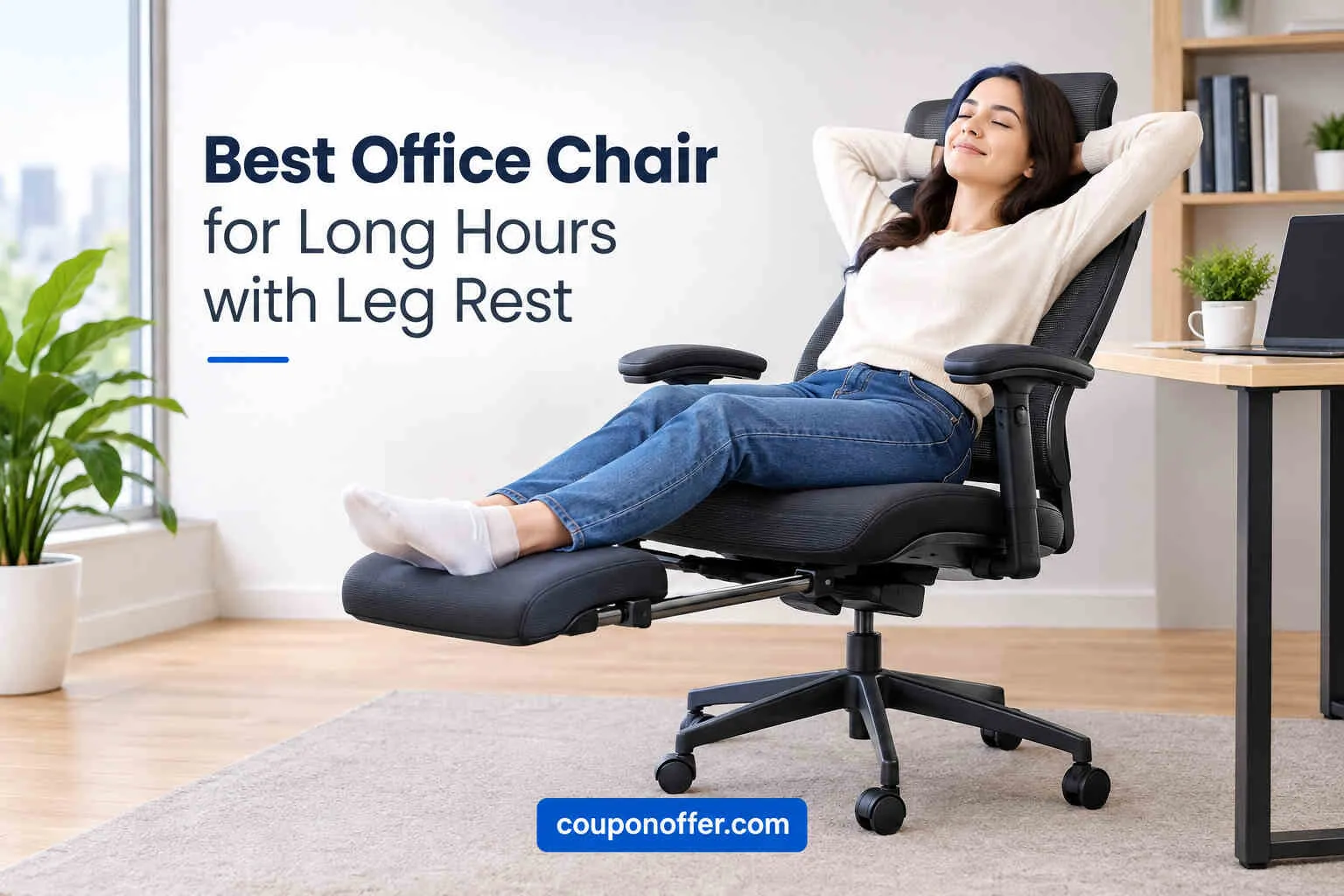

5 Best Office Chair for Long Hours With Leg Rest in 2026
Sitting at a desk for hours can become uncomfortable when a chair lacks proper support and a way to rest your legs. The best office chair for long hours with leg rest should combine ergonomic support, adjustable positioning, comfortable cushioning, and a practical footrest for occasional relaxation.
Whether you work from home, spend most of the day at a computer, or need a chair for extended shifts, choosing the right design can make long sitting sessions much more manageable. This guide compares key features, popular options, and factors to consider before buying.
What Makes an Office Chair Good for Long Hours?
Looking comfortable and actually being comfortable for eight hours straight are two very different things. A chair built for long sitting sessions needs to do real work — support your lower back properly, keep you positioned the way your spine actually wants to sit, and let you shift posture throughout the day instead of locking you into one position.
Most people looking for the best ergonomic office chair with footrest end up checking for the same handful of things: lumbar support you can actually adjust (not just a fixed bump), a backrest that supports your spine's natural curve, armrests, seat height adjustment, and some kind of recline. The footrest itself is more useful than people expect — when you lean back and want to take the weight off your legs for a bit, having somewhere to actually rest them makes a real difference.
One thing people skip past way too often: seat depth. Get this wrong and it throws everything off. Too deep, and if you're on the shorter side, your feet won't sit flat on the floor — you'll end up perched instead of seated. Too shallow, and taller folks lose thigh support, which just shifts the discomfort somewhere else. So honestly, checking the actual dimensions matters just as much as reading through the feature list, maybe more.
5 Best Office Chairs With Leg Rest Compared
Different users need different levels of adjustability, cushioning, and ergonomic support. The following options are worth considering when comparing chairs for long working sessions.
The right choice depends on whether your priority is a built-in leg rest, advanced adjustability, premium construction, or overall value. The sections below explain where each option fits best.
1. HBADA E3 Pro 2026 for Extended Sitting
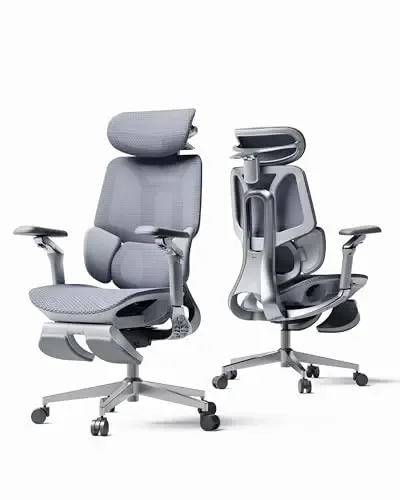
The HBADA E3 Pro 2026 is one worth putting on your radar if you want something modern that doesn't force you to choose between "ergonomic" and "relaxing." It's built for people who bounce between focused work and the occasional recline — not stuck in one mode all day.
If you're after an office chair with leg rest for work from home, the leg-support feature actually earns its place here. During breaks, or when you're doing something less demanding — answering emails, on a call, whatever — you don't have to stay bolt upright the whole time. You can shift position, give your legs a different angle, and just... breathe for a bit.
What makes it stand out for home-office setups is that it's genuinely trying to do two jobs at once — get real work done, and let you actually relax without switching chairs. That said, always double-check the current specs and exact features before buying, since model configurations can shift over time.
2. Steelcase Gesture for Premium Ergonomics
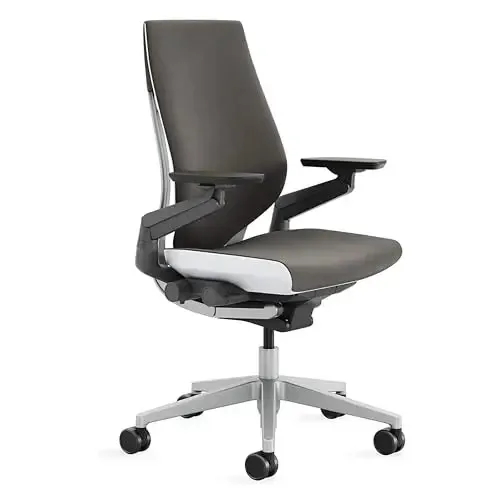
The Steelcase Gesture is built for a different kind of buyer — people who care more about adjustability and holding up over years of daily use than about flashy add-ons. It's not chasing a built-in leg rest as its selling point. Its real strength is how well it adapts to however you actually sit and work.
That's exactly why it comes up so often when people are searching for a premium office chair with footrest alternatives — cases where the ergonomics matter more than whether there's a fold-out leg rest bolted on.
It really shines if you're someone juggling multiple devices at once, or someone who just can't sit still in one posture for long. In those situations, having a chair that moves with you tends to matter more than extra padding ever could — especially when you're logging most of your day at that desk.
3. Marsail Ergonomic Office Chair for Home Offices
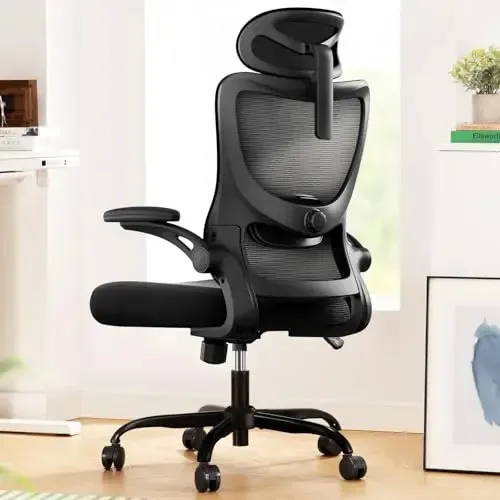
The Marsail Ergonomic Office Chair makes sense if you want the comfort features without jumping straight into premium pricing. If you're after an affordable office chair with leg rest, don't just chase the lowest number on the price tag — look at what you're actually getting for it.
A chair that gives you real adjustment options, decent lumbar support, and a recline that doesn't feel cheap tends to hold up better over time than one that's just... cheap. That combination works especially well in home-office setups, where the same chair ends up pulling double (or triple) duty — work during the day, studying at night, browsing on the couch-turned-desk, and the occasional lean-back moment in between.
Next up, worth thinking about how the chair actually holds up your body across a normal workday — not just how it feels for the first five minutes.
4. SIHOO Doro C300 Pro for Ergonomic Support
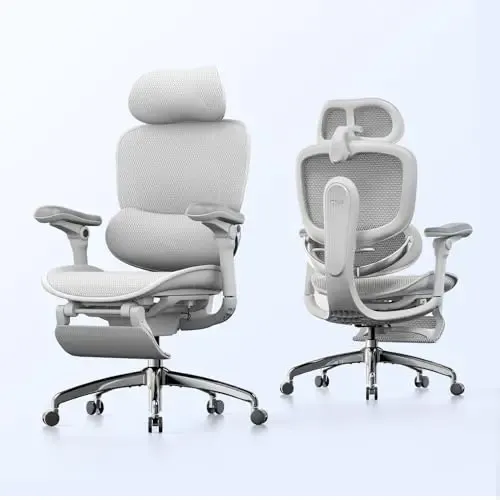
The SIHOO Doro C300 Pro is another one worth a look if ergonomic support is basically non-negotiable for you. It's built around giving your body real, structured support through however many hours you're glued to the seat. But here's something people mixing up when they search for an office chair with leg rest and lumbar support — those are actually two completely different things, not one package deal.
A leg rest is great for making the reclined moments more comfortable. Lumbar support is what actually matters while you're upright, hunched over a keyboard, getting work done. Mixing the two up is exactly why some people end up disappointed — a chair can feel amazing kicked back with your legs up, and still leave your lower back wrecked after three hours of actual desk work if the upright position isn't doing its job.
5. ELABEST X100 Ergonomic Office Chair
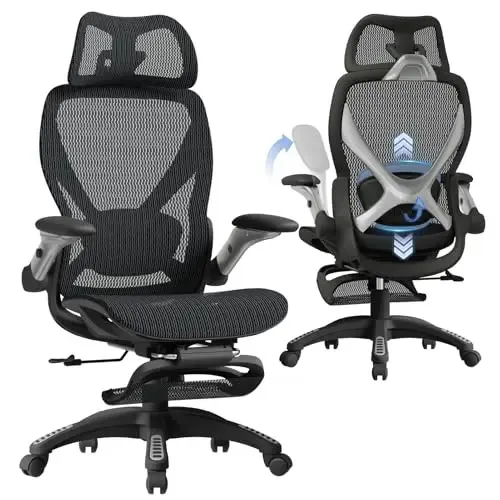
The ELABEST X100 Ergonomic Office Chair is a solid pick if you want one chair that can actually pull double duty across work, studying, gaming, and just chilling out. If you're browsing for an ergonomic mesh office chair with a footrest, don't let price be the only thing steering the decision — comfort and how well it actually adjusts to you matter more in the long run.
It comes loaded — 3D lumbar support, 5D flip-up armrests, an adjustable headrest, a breathable mesh back, and an extendable footrest. That's a lot of ways to fine-tune how you sit. The three-stage recline is what ties it together, honestly, letting you go from locked-in focus mode to leaned-back relaxed mode without needing a different chair for each.
It's a genuinely good fit for home-office setups where the same chair has to handle whatever the day throws at it. And if you're the type who's at your desk for hours on end, that mesh back breathing instead of trapping heat is going to matter more than you'd think.
Are Reclining Office Chairs Better for Long Sitting?
A best reclining office chair with footrest earns its keep for one simple reason: staying locked in the same position for hours straight just isn't good for you, no matter how comfortable that position felt at minute one. Being able to shift and recline periodically beats sitting frozen in place all day, every time.
That recline only actually helps if it's smooth and lets you settle into whatever angle feels right — not clunky, not stuck at two fixed settings. And that's where the footrest comes in, catching your legs and giving them somewhere to rest once you've leaned back. But here's the catch — reclining is a nice-to-have on top of good ergonomics, not a replacement for it. When you're actually typing or clicking away, your monitor, keyboard, desk, and chair all still need to line up and support you properly. The recline handles your breaks; the setup handles your work.
What Should You Look for in a Long-Hour Office Chair?
Before buying, focus on the features that affect everyday use rather than choosing a chair solely because it has a footrest.
These features should be considered together. For example, excellent cushioning cannot compensate for poor seat dimensions, while a good footrest does not compensate for inadequate back support.
Best Office Chair for 8 Hour Work Days
For an 8-hour workday, ergonomic adjustability should sit at the top of your list — above pretty much everything else. Think about it: you're spending way more time sitting upright and working than actually reclined, so the chair needs to earn its keep in that normal, upright position first. That means real adjustable lumbar support, a seat height that actually fits you, armrests that support instead of get in the way, and a backrest that moves with you instead of locking you rigid.
The leg rest? Nice bonus. Not the main event. Don't let a flashy footrest distract from whether the chair actually does its job for the seven-plus hours you're not reclining.
And honestly, the chair alone can only do so much. If your monitor's at the wrong height or your desk is positioned awkwardly, no amount of ergonomic engineering in the chair is going to fix that. The whole setup — chair, desk, monitor — needs to work together so you're not constantly reaching, bending, or twisting just to see your screen or grab your mouse.
Best Office Chair for 12 Hour Shifts
If you're pulling 12-hour shifts, adjustability and posture changes matter even more — not less. Even the best chair on the market isn't doing its job if the goal is sitting perfectly still for twelve straight hours. That's just not how bodies work. A chair with multiple recline positions gives you actual variation — upright while you're focused, reclined during breaks, and yeah, get up and walk around every so often too. No chair replaces that.
Breathable materials start mattering a lot more on long shifts too. Heat builds up, pressure builds up, and a chair that felt fine at hour two can feel pretty miserable by hour ten if it's trapping warmth against your back the whole time. At the end of the day, the best chair isn't the one with the most features on paper — it's the one that actually stays comfortable through whatever your real routine looks like, not some ideal version of it.
Is a Leg Rest Good for an Office Chair?
Use a leg rest when it actually makes sense, and it becomes genuinely worth having. Recline the chair back, kick your legs up, and those short breaks feel a lot better than sitting stiff for ten minutes pretending to rest. But nobody needs their legs up for eight straight hours — that was never really the goal.
When you're in the middle of real work, typing away, clicking through tabs, your feet planted flat on the ground usually serves you better than having them elevated. Shoppers just need to keep that in mind: a leg rest is a comfort add-on for your downtime, not the deciding factor for buying the chair.
How to Choose the Right Chair for Your Setup
Really comes down to how you actually use the chair day to day. Someone grinding eight hours at a desk cares more about adjustability. Someone who's watching videos, taking calls, or breaking often throughout the day probably cares more about the recline and leg support side of things.
Before you buy, run through this:
- How many hours do you normally sit each day?
- Do you mostly work upright, or find yourself reclining a lot?
- Do you actually need a built-in leg rest?
- Does adjustable lumbar support matter to you?
- Will more than one person be using this chair?
- What are the actual seat dimensions?
- Will it even fit under your desk?
Going through these actually saves you from the classic mistake — buying a chair because it looked comfortable in some product photo, then realizing at home that the dimensions or adjustments don't match your space at all.
Common Mistakes When Buying a Chair With a Leg Rest
Big mistake number one: assuming a footrest automatically means "ergonomic." It doesn't. The chair's real job is supporting you properly while you're actually working — the footrest is extra, not the foundation.
Mistake two: skipping over seat dimensions entirely. You can have top-tier materials and every feature under the sun packed in, and still end up with a chair that feels wrong simply because it's sized off for your body — too big, too small, doesn't matter which.
And don't judge comfort off the first five minutes sitting in a showroom or unboxing it at home. That tells you almost nothing about hour six. Look at adjustability, what it's actually made of, the warranty, what real users are saying after months of use, and whether it fits the position you'll mostly be working in — that's what actually tells you if it's worth buying.
Which Office Chair Should You Choose?
There is no single chair that is perfect for every user. The best option depends on the balance between ergonomic support, comfort, adjustability, reclining capability, and budget.
If the main goal is working comfortably for long periods, start with ergonomics. Then consider the footrest, reclining function, materials, as additional benefits.
Final Thoughts
At the end of the day, picking the best office chair for long hours with leg rest comes down to balance — support on one side, relaxation on the other. A built-in leg rest is a genuinely nice thing to have, sure, but not if it means sacrificing the stuff that actually matters: lumbar support, real adjustability, a seat that fits you, and a base that feels stable underneath you.
Get your priorities straight — the working position comes first, always. That's where you're spending most of your hours. Once that's locked in, let the recline and leg rest do their job during breaks, giving you somewhere to shift and reset between focused stretches. Nail that combination — proper ergonomics, real adjustability, genuine comfort — and the chair stops being just furniture. It actually becomes part of how you work, every single day.
Frequently Asked Questions
What is the best office chair for sitting long hours?
The best chair for long sitting should provide good lumbar support, adjustable height, appropriate seat dimensions, comfortable armrests, and a supportive backrest. A reclining function and footrest can add comfort during breaks.
Are office chairs with footrests worth it?
They can be worthwhile for people who frequently recline, take breaks in their chair, or want additional leg support. They are less important if you spend almost all of your working time sitting upright.
Is a leg rest good for an office chair?
Yes, a leg rest can provide useful support while reclining. It is best treated as a comfort feature that complements proper ergonomic support rather than replacing it.
Is a reclining office chair good for working?
A reclining chair can be useful because it allows you to change positions. For focused computer work, however, the chair should still provide a stable and supportive upright working position.
What is more important, lumbar support or a footrest?
For regular desk work, lumbar support is generally the more important feature. A footrest is particularly useful when reclining or relaxing, while lumbar support can contribute to comfort during normal working positions.
What is the best office chair for 8 hour work days?
Look for adjustable lumbar support, suitable seat depth, adjustable armrests, reliable height adjustment, and a supportive backrest. A footrest can be an added benefit if you regularly recline.
What should I check before buying an office chair with a leg rest?
Check the chair's dimensions, weight capacity, lumbar adjustment, reclining range, armrest adjustment, seat material, footrest design, warranty, and return policy. Make sure the chair fits your desk and working environment.
 Share On Twitter